Monday, March 6, 2017

Economy Of Notes And The Tones Of Pop

Image source: lotusmusic.com
One that we might see recurring in modern popular music today is that much of it is composed mainly of melodies derived from the same progression of four notes. Called the pop-progression, these same four notes really do sound rather versatile (scientifically proven, too), and works across such disparate genres from punk rock to blues. This is ironic in that many pop genres originated from jazz, which has seven chords and can be incredibly complex.

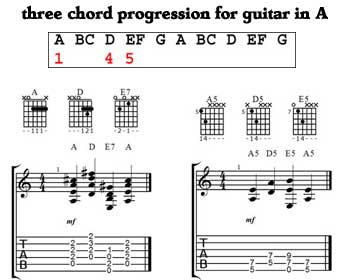
A mostly countercultural version, which appears cyclical with its four-note counterpart, is the three-chord progression, usually seen among alternative rock circles, often with the moniker “three chords and the truth,” eschewing any additional complexity.

These chords are subject of major criticism (and a lot of jokes) from music circles. Pop-punk progression is dismissed as trite and soulless, whereas the less polished three chord progression is derided as unsophisticated and pretentious. Both are subject to a common criticism: after a while, they all sound pretty much the same.

Image source: guitar-skill-builder.com
Let’s get one thing out of the way, first, shall we. Despite what you might read here, there is no one “golden mean” of chords that guarantee that a song would be good. A good composition can have as many or as little notes as it needs to have. But complexity (or the lack thereof) itself is not a benchmark for quality.

In much the same way that an artist can create a masterpiece using just a small but complementary palette of color, so can a musician make a great song from just a few notes. There are many reasons why a song is good (or abysmal), and it is rarely because it sounds vaguely like another song.
The name’s Bradley J. Sterling, music fan and UCLA theater major. For more on my thoughts about music theory and musical theater, follow me on Twitter.


Wednesday, February 15, 2017

The Greatest Pianists Of All Time

As a pianist, I consider playing the piano one of the easiest to learn yet hardest to master instruments. There’s a lot of great contemporary pianists out there. But who are the greatest pianists who ever lived?

1. Ludwig Van Beethoven

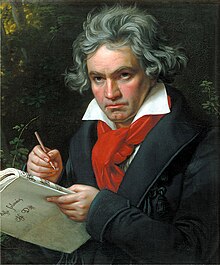
He was known as a great composer, but he was a great pianist first. Taught by his father, he learned to play the piano at age 4. He was a natural. At age 20, he started losing his hearing. That didn’t stop him playing. At age 30, he premiered the Septet (Op. 20), one of his most famous pieces.

Image source: wikemedia.org

2. Wolfgang Amadeus Mozart

We may have never heard him play. But his Piano Concerto No.21 will give you an idea of the musical genius that he is. It’s sad though that he died at age 35.

3. Frederic Chopin

His playing style was subtle and soft, similar to his polite nature. His playing was so delicate that listeners said that he had the ability to create inky and subtle colors. He was more of a poet than a keyboard acrobat.

Image source: classicfm.com

4. Martha Argerich

Opposite to Chopin, Argerich plays with savage speed she would destroy you in a piano duel. But despite her fierce attack in playing, she had a soft touch to wonderfully complement her music.

Hi, I’m Bradley J. Sterling. If you love music, follow me on Twitter for more updates on the music industry.

Tuesday, January 10, 2017

The Hitmakers: Who Are The World’s Greatest Music Producers?

If you’re a music lover, it’s not enough that you know how a song goes. For the avid ones, sometimes it’s important to know who the producer is. Sometimes I can tell just by the arrangement. In case you have no idea who the greatest hitmakers of our time are, I’ll talk about some of them on this post.

Max Martin

What would pop music be without this Swedish producer? Since the bubblegum pop ear, Max Martin has been churning out hit after hit such as Britney’s “...Baby One More Time” and Katy Perry’s “Roar”. The producer also helped Taylor Swift with her album 1989 which garnered Best Album nods.

Image source: Charismanews.com


Ryan Tedder

Most music fans might know his as the frontman for One Republic but he is also a hotshot producer who worked with a variety of pop acts such as Beyonce, Adele, Ariana Grande, Kelly Clarkson, and Taylor Swift. His band’s hits “Counting Stars” and “Apologize” also have that LSS-inducing melodies that are hard to shake off.

Quincy Jones

The man behind Michael Jackson’s “Thriller”, Quincy Jones is a legend with more than five decades in the industry, 79 Grammy nominations, and hundreds of hits under his belt. He also worked on the scores for over 30 films including E.T.. Even in this age of digital production, Quincy Jones proves that he’s still got the magic touch. The legend also shows us that talent is ageless.

Image source: Pbs.org


Maybe someday I can be like these guys. For now, I need to continue producing music for theater productions in school. So far, so good.

I’m Bradley J. Sterling and I’m a theater student from UCLA. Follow my tweets here.

Thursday, December 15, 2016

The Great Nph-James Corden Broadway Musical Showdown

I rarely watch TV. But if ever I had the chance to do so, one of the shows that I tune into is “The Late Late Show.” I mean, James Corden is a master entertainer. He is a pretty hilarious host AND a great singer. His show’s hit segment, Carpool Karaoke, is a testament to the guy’s talent. So, I am not surprised that Corden has become a hit among U.S. late night viewers.

Image source: billboard.com


And if there’s one a person who can rise to Corden’s hosting and singing skills, it has to be Neil Patrick Harris. Both Harris and Corden starred on Broadway and won a Tony for their performance. Both hosted the Tony Awards. So, if there would be a hosting or musical showdown between the two, it would definitely be legendary.

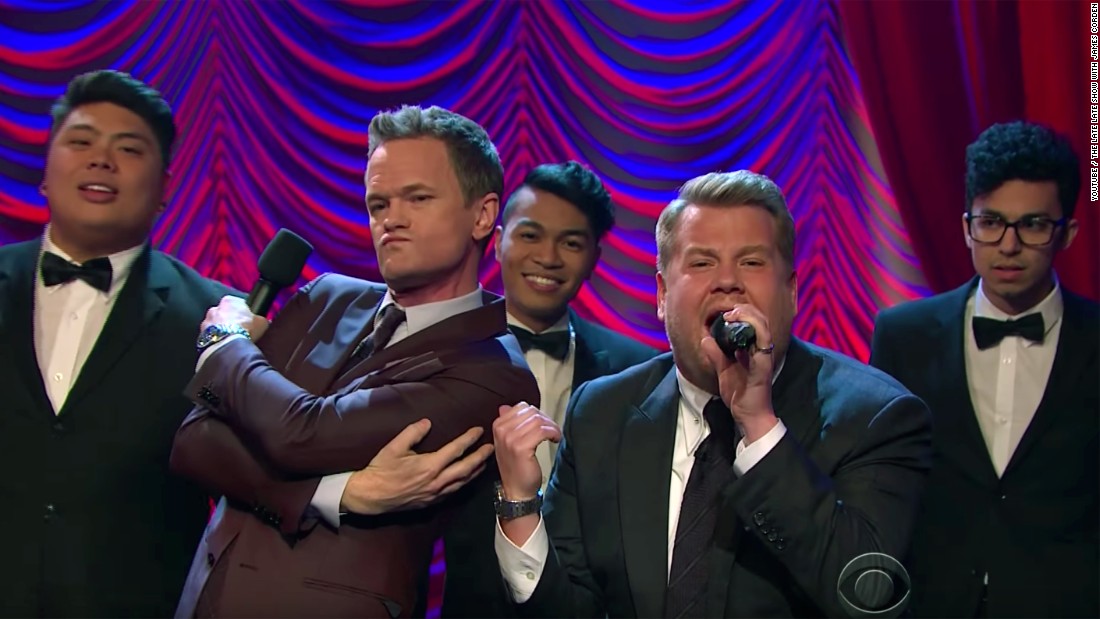
And the TV gods responded. NPH dropped by (or should I say gate-crashed) Corden’s Jan. 9 show to challenge him to a riff-off to settle once and for all “who is truly more Broadway.” Featuring the a cappella group The Filharmonic on backing vocals, NPH and Corden belted out “Sit Down, You’re Rockin’ the Boat” (Guys and Dolls), “Everything’s Coming Up Roses” (Gypsy), “Being Alive” (Company), “On My Own” (Les Misérables), “All That Jazz” (Chicago), and “Sugar Daddy” (Hedwig and the Angry Itch). Both NPH and Corden were flawless in their renditions of timeless Broadway tunes, and honestly, it was difficult to choose the winner of the battle. Especially after ending the epic duet some with “My Shot” (Hamilton).

Image source: cnn.com


Words are not enough to describe how gifted these two performers are. I hope someone (paging Lin Manuel-Miranda) would pen a play that will be headlined by these two. But for now, let’s be grateful that this video exists.

Hello, Bradley J. Sterling here. As a theater major, I can’t express how glad I was when I chanced upon the NPH-Corden Broadway showdown. We need more Showtunes sing-offs, right? Drop me a note on Twitter.

Monday, November 7, 2016

Worlds on Stage: The Different Genres of Stage Plays

Stage plays are magical things. They take people to different worlds, and they do it live, not pre-recorded. The worlds that the audience are transported to depend mainly though on the genre, or category of the play, which in turn, depend on its subject and theme.

Comedies, for example, showcase normal people in very amusing situations. The endings are usually joyous. Comedies tackle relationships among characters and how they feel. Sometimes the humor is slapstick, and these plays mainly play to the enjoyment of the viewers. On the opposite end, tragedies almost never end happily. These plays are oftentimes more serious than comedies and are marked by a death of a beloved or admirable character or characters.


Image source: vergecampus.com


Drama is also closely related to tragedy. The difference though is that characters in dramas are often the everyday variety, whereas tragedies usually have notable characters in the upper echelons of society for leads. Dramas deal with everyday trials and don’t necessarily end with a major character’s death. Conflict is a big part of drama plays.

Image source: ebeijing.gov.cn

Satyr or satire is done between tragedy plays. The purpose of satyr plays is to show the funny and lighter side to an overly serious, and otherwise sad story. A satyr play mocks and mimics and is quite similar to comedies.

Bradley J. Sterling is studying theater at UCLA. His other passion aside from theater, is music. Learn more about theater arts by following Bradley on Twitter.

Monday, October 3, 2016

The real deal: A collector's guide to finding authentic memorabilia

Over the last couple of years, we've had some awesome ("Guardians of the Galaxy") and not-so-awesome ("Fantastic Four") superhero movies, and that's great for a fan like me. Now that we've seen movies about some of the comic book world's most popular heroes like Superman, Batman, Iron Man, Spiderman, and the Avengers, though, I think it's high time Hollywood started mining deeper into vaults for other more interesting though probably not as famous heroes.

Image source: dc.wikia.com

For instance, I think a movie focusing on DC's Teen Titans is a great idea. Not only is this team of mostly-sidekicks a formidable team of heroes, but they're also younger than the Justice League, so there's an opportunity for teen angst, romance, and hijinks. Plus, some of their regular villains are actually scary such as Deathstroke, the mercenary, and Trigon, who's basically the devil in the DC Universe. I'd also recommend a movie about the multi-generational team of Justice Society of America. I think crime-fighting and navigating relationships between old and novice superheroes can be fun.
On the Marvel side of things, it might be cheating since he's already been in a movie but I'd love to see Hawkeye in his own motion picture, especially as based on the Matt Fraction comics run. I don't know how they might translate the artwork onscreen if it's live action, but that's a great challenge – perhaps one only a superhero can solve. I also recommend a movie starring the perfect for all ages Moon Girl and Devil Dinosaur. It has an adorable and super-smart lead, Moon Girl, and it has a powerful, intelligent red dinosaur, Devil Dinosaur. This has tremendous potential to be a fun holiday movie for the entire family.

Image source: sequart.org

Finally, for more serious fare, there's Darkhorse's Concrete. He's a superhero as much as a guy whose brain was transplanted by aliens into concrete-like body can be. He performs mundane and extraordinary tasks with varying levels of success while contemplating his humanity inside a concrete shell. If there ever was a philosophical superhero movie, it'd be this.
I'm Bradley J. Sterling, and if you couldn't already tell, I'm a big fan of superhero movies. Follow this blog for more of my thoughts on superhero movies and my other interests.